Have you noticed a swelling or lump in the front of your neck? Thyroid swelling is a common condition that can occur for several reasons, including an enlarged thyroid gland, thyroid nodules, inflammation or other thyroid disorders. Although some thyroid swellings are harmless, others may require medical evaluation and treatment.
Understanding the cause of thyroid swelling is the first step towards choosing the right treatment. If you are looking for thyroid swelling treatment in Hyderabad, consulting a qualified thyroid and head–neck surgeon can help you understand your condition and available treatment options.
What Is Thyroid Swelling?
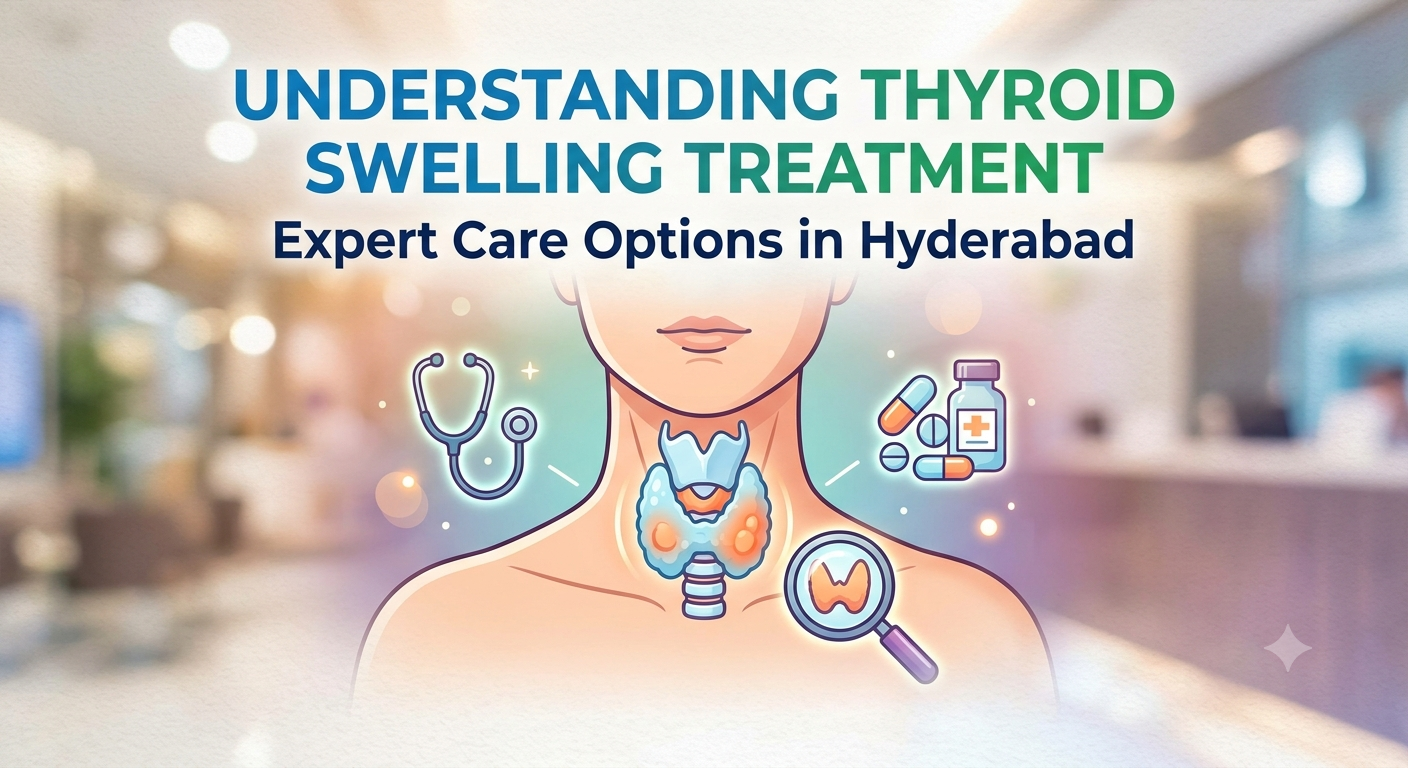
The thyroid is a butterfly-shaped gland located at the front of the neck, just below the Adam’s apple. It produces hormones that regulate metabolism, body temperature, heart rate and several other important functions.
When the thyroid gland becomes enlarged or develops one or more nodules, it may cause visible swelling in the neck. This enlargement is medically known as a goitre. Thyroid swelling may occur even when thyroid hormone levels are normal.
What Are the Common Causes of Thyroid Swelling?
Thyroid swelling can develop for different reasons, including:
1. Thyroid Nodules
Thyroid nodules are lumps that develop within the thyroid gland. Most are non-cancerous, but some may require further investigation to rule out thyroid cancer.
2. Goitre
Goitre refers to an enlargement of the thyroid gland. It may be associated with iodine deficiency, autoimmune thyroid disease or other thyroid conditions.
3. Hypothyroidism
An underactive thyroid may sometimes be associated with thyroid enlargement, particularly in conditions such as Hashimoto’s thyroiditis.
4. Hyperthyroidism
Certain conditions that cause excessive thyroid hormone production, such as Graves’ disease or toxic thyroid nodules, may be associated with an enlarged thyroid gland.
5. Thyroiditis
Inflammation of the thyroid gland can cause swelling, tenderness, or pain in the neck. Some forms of thyroiditis may also affect thyroid hormone levels.
6. Thyroid Cancer
Although many thyroid lumps are benign, a thyroid swelling that grows, feels firm, or is associated with persistent hoarseness or enlarged neck lymph nodes needs prompt medical assessment.
What Are the Symptoms of Thyroid Swelling?
The symptoms depend on the size of the swelling and its underlying cause. Common signs include:
- A visible lump or swelling at the front of the neck
- A feeling of tightness or pressure in the throat
- Difficulty swallowing food or liquids
- Breathing discomfort, particularly when lying down
- Persistent hoarseness or voice changes
- Neck discomfort or pain in some cases
- Unexplained changes in weight, energy levels or heart rate when thyroid function is affected
Some people with thyroid nodules experience no symptoms, and the swelling may be discovered during a routine examination or imaging test.
Important: Seek emergency medical care if you develop severe or rapidly worsening breathing difficulty or cannot swallow saliva.
How Is Thyroid Swelling Diagnosed?
Accurate diagnosis is essential before starting thyroid swelling treatment. Your doctor may recommend the following investigations based on your symptoms and examination:
1. Clinical Examination: The doctor examines the neck to assess the size, location, and characteristics of the swelling.
2. Thyroid Function Tests: Blood tests such as TSH and, when appropriate, free T4 and T3 help evaluate thyroid hormone function.
3. Thyroid Ultrasound: Ultrasound helps identify the size, structure, and features of thyroid nodules and assess whether further investigation is needed.
4. Fine-Needle Aspiration Cytology (FNAC): A small sample of cells may be collected from a thyroid nodule when indicated to assess whether it is benign or suspicious for cancer.
5. Additional Investigations: Depending on the findings, your doctor may recommend further blood tests, imaging or specialist evaluation.
Not every thyroid swelling requires a biopsy or surgery. The appropriate investigations depend on the clinical findings and ultrasound characteristics.
What Are the Treatment Options for Thyroid Swelling?
Thyroid swelling treatment depends on its cause, size, symptoms, thyroid hormone levels and the possibility of malignancy.
1. Observation and Regular Monitoring
Small, benign thyroid nodules that do not cause symptoms may not require immediate treatment. Your doctor may recommend periodic clinical examinations, ultrasound scans or thyroid function tests.
2. Medication
Medication may be prescribed for specific thyroid conditions, including an underactive or overactive thyroid. In cases of thyroid inflammation, treatment depends on the underlying cause.
However, thyroid hormone medication is not routinely recommended simply to shrink every thyroid nodule.
3. Minimally Invasive Treatments
Selected benign thyroid nodules may be suitable for image-guided thermal ablation, such as radiofrequency ablation, depending on their characteristics and local availability. This treatment may reduce nodule volume without removing the entire thyroid gland.
Not every nodule is suitable for ablation. A thorough assessment is necessary before considering this option.
4. Thyroid Surgery
Surgery may be recommended when thyroid swelling causes difficulty swallowing or breathing, produces significant pressure symptoms, is associated with suspicious or confirmed cancer, or meets other clinical indications.
Depending on the diagnosis, the surgeon may recommend removal of part of the thyroid gland or the entire gland. The decision is made after evaluating the potential benefits, risks and alternatives.
Can Thyroid Swelling Be Treated Without Surgery?
Yes, some cases of thyroid swelling can be managed without surgery.
Small, benign nodules may only require monitoring. Thyroid disorders that affect hormone production may respond to appropriate medication. Selected benign nodules may also be considered for minimally invasive treatments.
However, non-surgical treatment is not appropriate for every thyroid condition. Nodules that are suspicious for cancer, cause significant compression or have other concerning features may require surgery or additional investigation.
Avoid taking thyroid supplements or herbal remedies without medical advice, as they may not treat the underlying condition and some may interfere with thyroid function.
When Should You Consult a Thyroid Specialist?
Consider consulting a thyroid specialist if you notice a new lump in your neck, a swelling that is increasing in size, persistent swallowing difficulties, unexplained voice changes or a previously diagnosed thyroid nodule that requires follow-up.
A rapidly enlarging swelling, particularly with breathing or swallowing difficulty, needs urgent assessment.
Early evaluation helps identify the cause of the swelling and determine whether observation, medication, a minimally invasive procedure or surgery is appropriate.
Thyroid Swelling Treatment in Hyderabad
If you are searching for thyroid swelling treatment in Hyderabad, Amrita ENT & Head–Neck Hospital provides evaluation for thyroid and head–neck conditions.
Dr. Rahul Buggaveeti, Thyroid & Head–Neck Surgeon, can assess thyroid lumps, thyroid nodules and other thyroid-related concerns and explain the appropriate treatment options based on the diagnosis.
Patients from KPHB, Kukatpally, JNTU and nearby areas can contact the hospital to enquire about an appointment.
Book a Consultation
Amrita ENT & Head–Neck Hospital
Phone/WhatsApp: 7032255931
Website: https://amritaent.com/
Conclusion
Thyroid swelling can develop due to several conditions, ranging from benign thyroid nodules to disorders that require specialised treatment. The right approach begins with an accurate diagnosis rather than assuming that every neck lump needs medication or surgery.
If you notice a lump or swelling in your neck, consult a qualified thyroid specialist to understand the cause and discuss suitable treatment options.
For thyroid swelling evaluation in Hyderabad, contact Amrita ENT & Head–Neck Hospital to enquire about a consultation with Dr. Rahul Buggaveeti.