Is a Thyroid Nodule Dangerous?
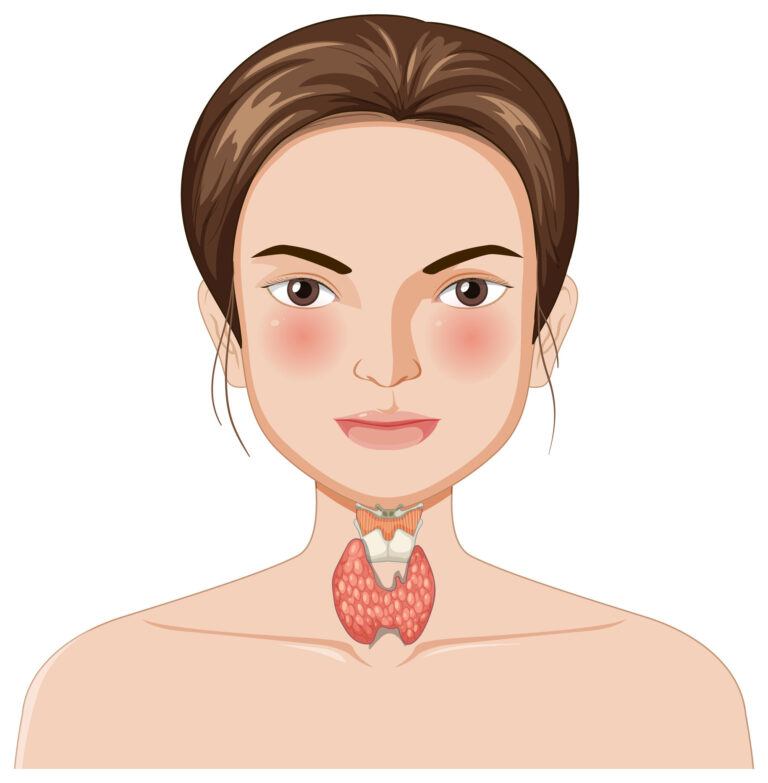
A thyroid nodule is a lump that develops within the thyroid gland, located at the front of the neck. Most thyroid nodules are benign (non-cancerous), but some may be cancerous and require further evaluation. Whether a thyroid nodule is dangerous depends on its ultrasound features, biopsy results, growth pattern and associated symptoms.
If you notice a lump in your neck or have an abnormal thyroid ultrasound report, consulting a qualified doctor can help determine the appropriate next steps.
What Is the Difference Between Benign and Cancerous Thyroid Nodules?
Benign Thyroid Nodules
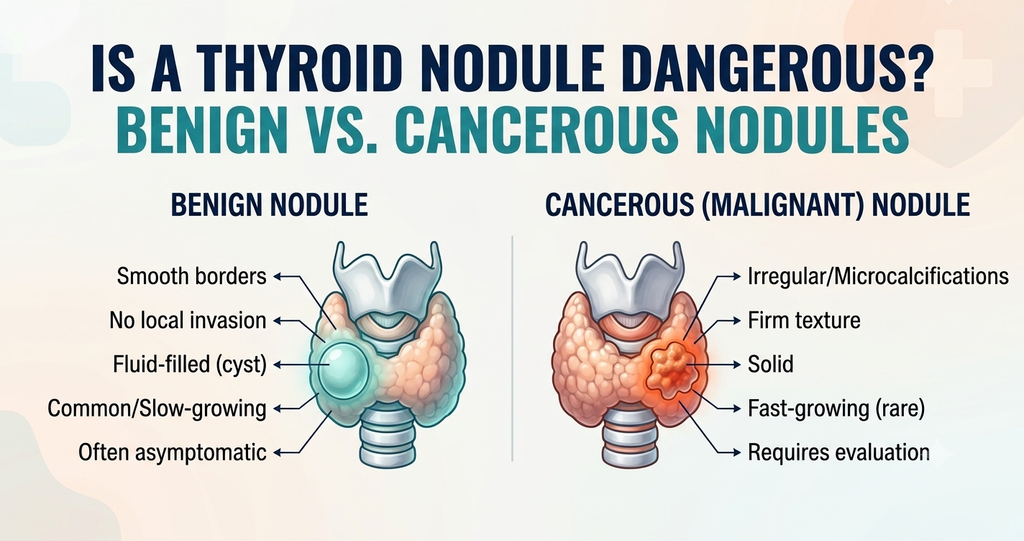
Benign thyroid nodules are non-cancerous growths. They may be solid, fluid-filled or a combination of both. Many do not cause symptoms and can be monitored without surgery.
Common characteristics include:
- No significant symptoms in many patients
- Stable size over time in some cases
- Normal or abnormal thyroid hormone levels, depending on the underlying condition
- A need for periodic follow-up based on clinical findings
A benign nodule may still require treatment if it becomes large, causes pressure symptoms or develops concerning changes.
Cancerous Thyroid Nodules
Cancerous thyroid nodules contain malignant cells. Some thyroid cancers grow slowly, while others may behave more aggressively.
Features that may prompt further evaluation include:
- A suspicious appearance on thyroid ultrasound
- Certain abnormal lymph nodes in the neck
- A growing neck lump
- Persistent hoarseness or difficulty swallowing
- A family history of specific thyroid cancers or a history of relevant radiation exposure
These findings do not automatically mean a nodule is cancerous. Appropriate testing is needed to assess the risk.
How Can You Know Whether a Thyroid Nodule Is Cancerous?
Doctors may recommend the following investigations depending on the individual case:
1. Thyroid ultrasound: Evaluates the nodule’s size, composition and suspicious features.
2. Thyroid blood tests: TSH and other tests, when indicated, help assess thyroid function. They cannot independently rule out thyroid cancer.
3. Fine-needle aspiration (FNA) biopsy: A thin needle collects cells from selected nodules for laboratory examination.
4. Additional evaluation: Depending on the results, further testing, specialist consultation or surgery may be recommended.
Does Every Thyroid Nodule Need Surgery?
No. Many benign thyroid nodules only require monitoring. Surgery may be recommended for nodules that are confirmed or suspected to be cancerous, cause significant pressure symptoms, or meet other clinical criteria.
The treatment decision depends on the complete evaluation, not simply the presence of a lump.
When Should You Consult a Thyroid Specialist?
Seek medical evaluation if you notice a new or enlarging neck lump, have a suspicious thyroid ultrasound or biopsy result, or experience persistent voice changes or swallowing difficulties. Severe or rapidly worsening breathing difficulty requires urgent medical attention.
Thyroid Nodule Evaluation in Hyderabad
Amrita ENT & Head–Neck Hospital in KPHB, Hyderabad, provides a point of contact for patients seeking evaluation of thyroid nodules and thyroid-related neck lumps.
Patients can enquire about consultation with Dr. Rahul Buggaveeti and discuss their reports, symptoms and appropriate treatment options.
Location: KPHB, Hyderabad
Phone/WhatsApp: 7032255931
Website: https://amritaent.com/